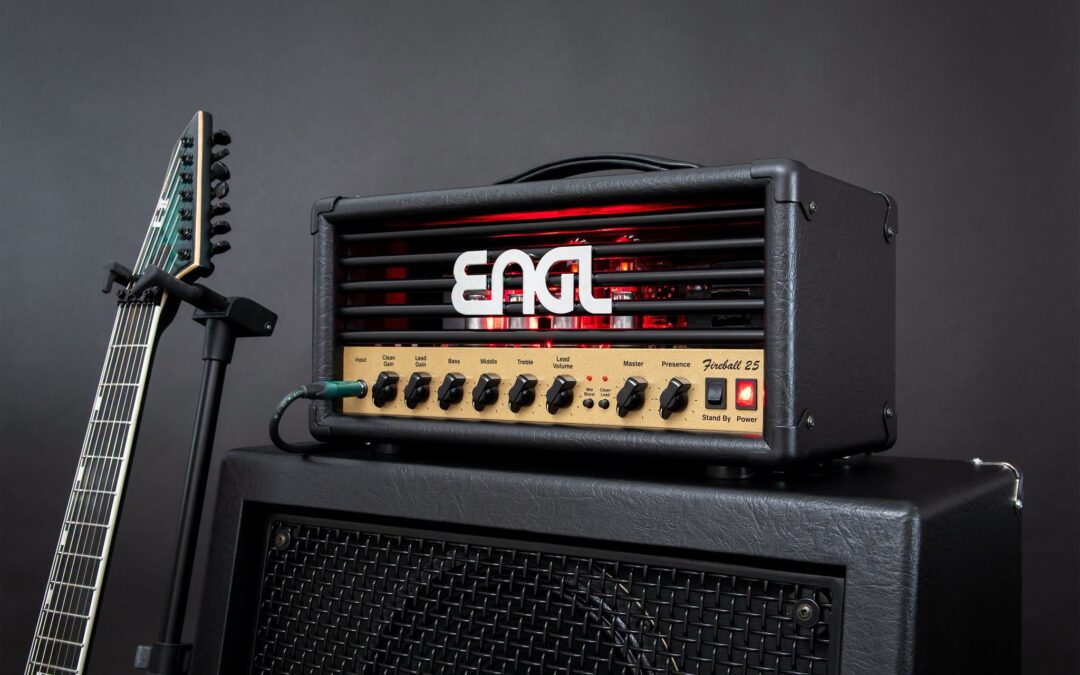
The Ironball SE – Compact without compromise…
by Richard Oliver
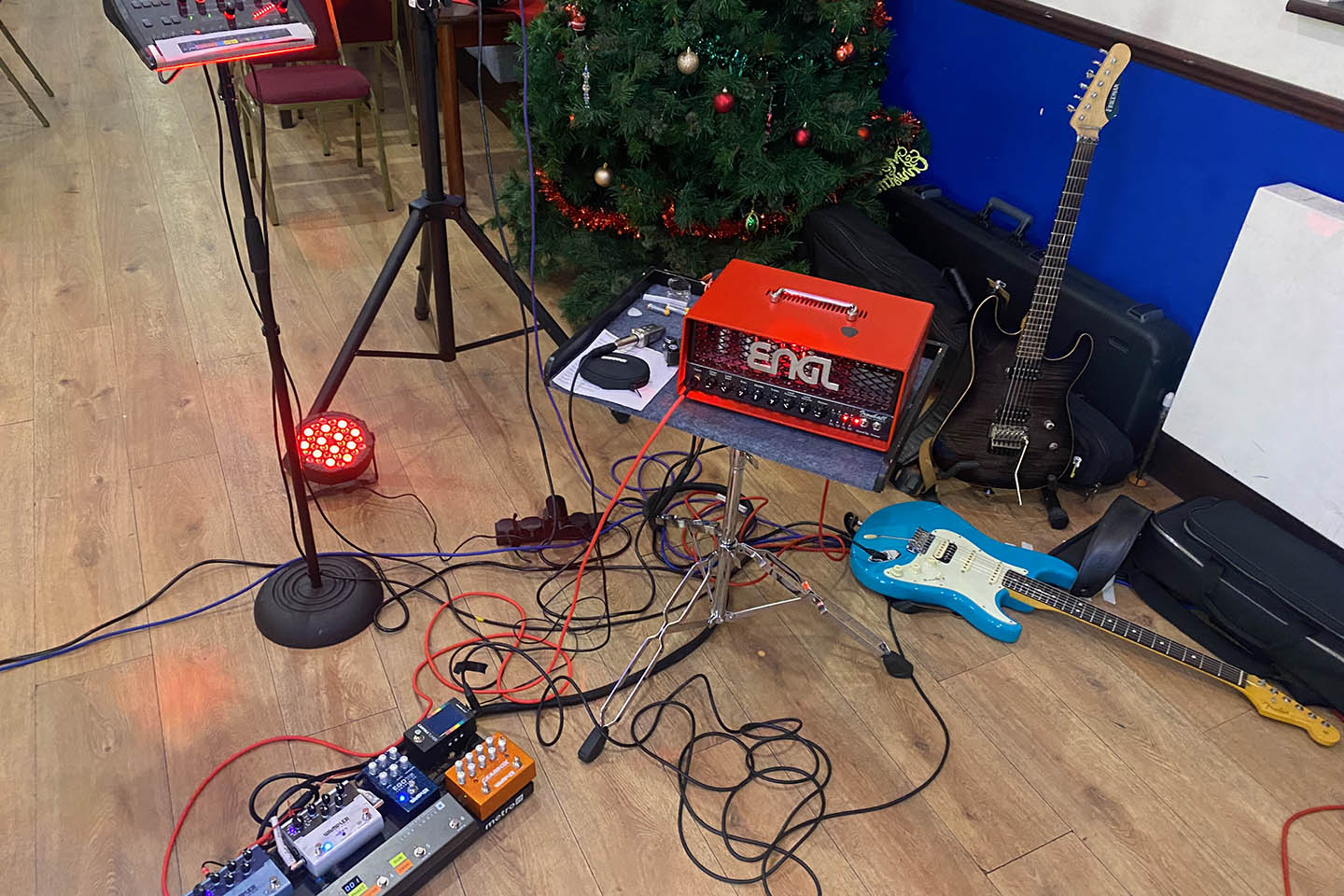
There’s a particular relief that comes with loading in for a show and realising your entire amp setup fits in one hand. The Ironball Special Edition (E606SE) is 7 kilograms of tube head that does the work of a full rack rig – and when it came time for me to pick a rig for my 80’s tribute band, this was the perfect choice…
The Headline: It’s Still All-Tube where it Counts
Before getting into the digital features, the foundation matters. The Ironball SE keeps the signal path entirely analogue – four ECC83 / 12AX7 preamp tubes and a pair of EL84s in the power section. The MIDI, effects and Impulse Response loader are digital, but they sit around the tone rather than in front of it. That distinction shows up the moment you plug in. The clean channel has the chime you’d expect from EL84s, and the lead channel has weight and saturation that doesn’t feel processed. Run the XLR straight to front of house, monitor through in-ears or headphones, and you’ve got studio-quality cab simulation without a single moving cone in the room.
This is where the Ironball SE absolutely delivers. With every output you could possibly need, it’s simple to connect this up in almost any rehearsing or gigging band scenario. With IR cabs available too, you can tune it to your environment perfectly. It’s just so versatile. I mainly use 2 guitars – a Fender HSS Strat and a Friedman Cali Elite with some fairly hot Seymour Duncan Humbuckers in it…The Ironball is just at home with a quacky single coil as it is with a snarling hum-bucker. It’s ridiculously good with an active pickup too.
MIDI Control: Switching without Dancing on Pedals
Our normal setlist consists of about 35 songs, and I have to cover a lot of tones because we go from clean compressed Ska and Electro pop to Hair Metal and Pub rock classics. We’re talking swirling Chorus, Digital Delays, Rockman style distortions – you get the picture. I achieve this with a MIDI controller that I have linked to my front-of-amp modulation effects and my additional delay unit in the FX loop of the Ironball. It’s so simple to program scenes on the Ironball that I set my amp up slightly differently for each patch, and the results do not disappoint. You can, of course, control the channel selection via MIDI, but you can also set the FX loop status (on or off) and control the gate, boost, reverb, and delay states. With a simple MIDI setup, one button gets me my modulation, delay, and amp tones in an instant.
Because the Ironball “Learns” MIDI scenes without a need to consult a lengthy manual CC numbers, it takes no time to set this puppy up for a band. My workflow was to get my pedalboard set how I liked it, dialling in delay and modulation on my pedals and the amp settings on the amp, putting the pedals and the amp in learn mode, then sending a PC command from my MIDI controller. This teaches the pedals and the amp at the same time that when they receive this PC message they need to sound how I set them – nothing could be simpler! Connectivity wise MIDI is super simple to patch in with the Ironball – it has a MIDI DIN input round the back, and sits at the end of my MIDI chain.
Power Soak and FX-Loop: Rehearsals, Sorted
The Power Range Selector gives you Full Power (20W), 5W, 1W and Speaker Off. That sounds like a lot of options for a small head, but each one earns its place. Sometimes we rehearse in professional spaces where we have a variety of (often heavily beaten-up) cabs to play with – and I always prefer to have a real amp behind me if I can. If that room shrinks, or my singer has a hangover, I turn down to the 5W or 1W setting and everyone is happy. This also, of course, lets me run the tubes a bit harder, and the saturation is gorgeous. The gain sounds this amp can produce are insane- it can go mild crunch to insane distortion. Oh and did I mention the onboard boost? Seriously impressive firepower here.
The tube-buffered effects loop is one of those features that gets glossed over in spec sheets but matters enormously in use. Time-based effects sit between the preamp and power amp where they belong, and crucially, the loop itself can be switched via MIDI. The built-in delay on the Ironball SE is great – but there are times when I need more of a modulated tape delay or flanged delay, so I use a separate MIDI-powered delay pedal. The onboard reverb, though, has proved perfect – I don’t really need to dial much in when I’m playing in a small venue, but it’s nice to have a bit of extra space in the sound.
Final Thoughts
The Ironball SE is built for guitarists who need one amp that does everything – club gigs, festival slots, recording, silent practice and quick fly-date setups. The all-tube core keeps the tone honest, and the digital features are there to make the working musician’s life easier rather than to chase trends. most importantly (well, for those of a certain vintage lets just say) you wont bust your back moving it between gigs and rehearsals. With it’s super convenient carry handle and tiny footprint it’s definitely punching well beyond it’s weight.
After a year of regular use, I still haven’t found a scenario it can’t handle. The clean channel makes the perfect pedal platform, and the lead channel goes from warm and cuddly to animalistic saturation with ease. It is also built into a rugged metal casing that has proven “pub friendly” – and as mentioned it is definitely back friendly! For me, the SE model with its additional digital features is a no brainer – it is the perfect Swiss army knife for my band, allowing me to use an array of pedals and get a warm analogue tube tone as well as benefit from digital technology and external switching.
As I packed up my gear, a slightly drunken reveller approached me and asked if he could play my guitars. There is an unwritten law that says this must never happen, so I told him my gear was switched off and just prayed that he didn’t notice the warm red glow from my Ironball. He didn’t, and after asking me to sign his setlist, he went to harass the drummer instead – phew – a bullet dodged…